
For Research Use Only. Not for human or veterinary use.
Enterocin (CAS: 59678-46-5)Product ID: BLK-0950 CAS 59678-46-5 Mechanism Primary Target | |
| Structure | 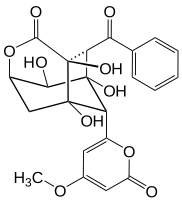 |
| CAS | 59678-46-5 |
| Molecular Formula | C22H20O10 |
| Molecular Weight | 444.39 |
| Price | 1mg: USD 150.00 / 5mg: - / 25mg: - |
| Storage | -20°C |
| Solubility | 1mg/ml ethanol, methanol, DMSO |
| Purity | >95% [View LC/UV Data] |
| LC/UV | Representative LC/UV chromatogram under typical analytical conditions (C18 column; mobile phase: 5–100% ACN / H2O (0.05% H3PO4), linear gradient 20 min; flow rate: 0.2 mL/min; detection: 210 nm). |
| NMR Data | 1H NMR (CD3OD, 500 MHz) [View] [Full page] 13C NMR (CD3OD, 125 MHz) [View] [Full page] |
| NMR Spectral Data | Representative 1H NMR (CD3OD, 500 MHz) spectrum confirming the structure of Enterocin. Representative 13C NMR (CD3OD, 125 MHz) spectrum supporting structural assignment of Enterocin. |
| Source Organism | Streptomyces sp. |
| Summary | Enterocin is a ribosomally synthesized antimicrobial peptide that disrupts Gram-positive bacterial membranes. |
| Details | |
| Browse Related | |
| Mechanism | Pore-forming bacteriocin |
| Primary Target | Bacterial cytoplasmic membrane |
| Pathway | Bacterial membrane integrity; ABC transporter-mediated immunity |
| Chemical Class | Ribosomally synthesized peptide (bacteriocin) |
| Discovery Year | 1978 |
| Keywords | |
| References |
|
Request pricing, availability, or bulk supply information for this compound. Get a QuoteGeneral Inquiry | |
Documents | |
| ← Back to Catalog | |
Representative LC/UV Data 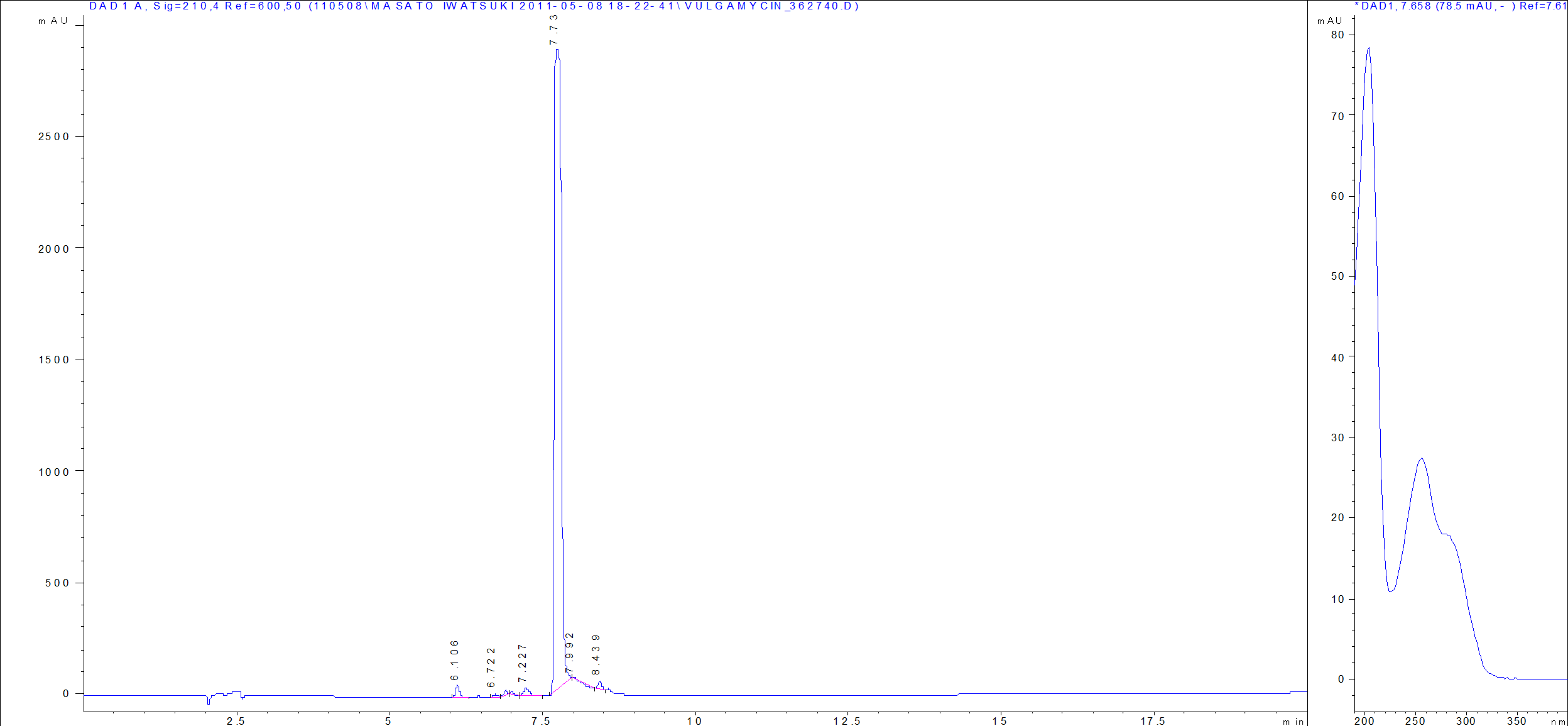 HPLC Conditions (typical): Column: C18 Mobile phase: 5–100% ACN / H2O (0.05% H3PO4), linear gradient 20 min Flow rate: 0.2 mL/min Detection: 210 nm Representative analytical data. Actual batch data may vary. | |
Representative NMR Data 1H NMR (CD3OD, 500 MHz) 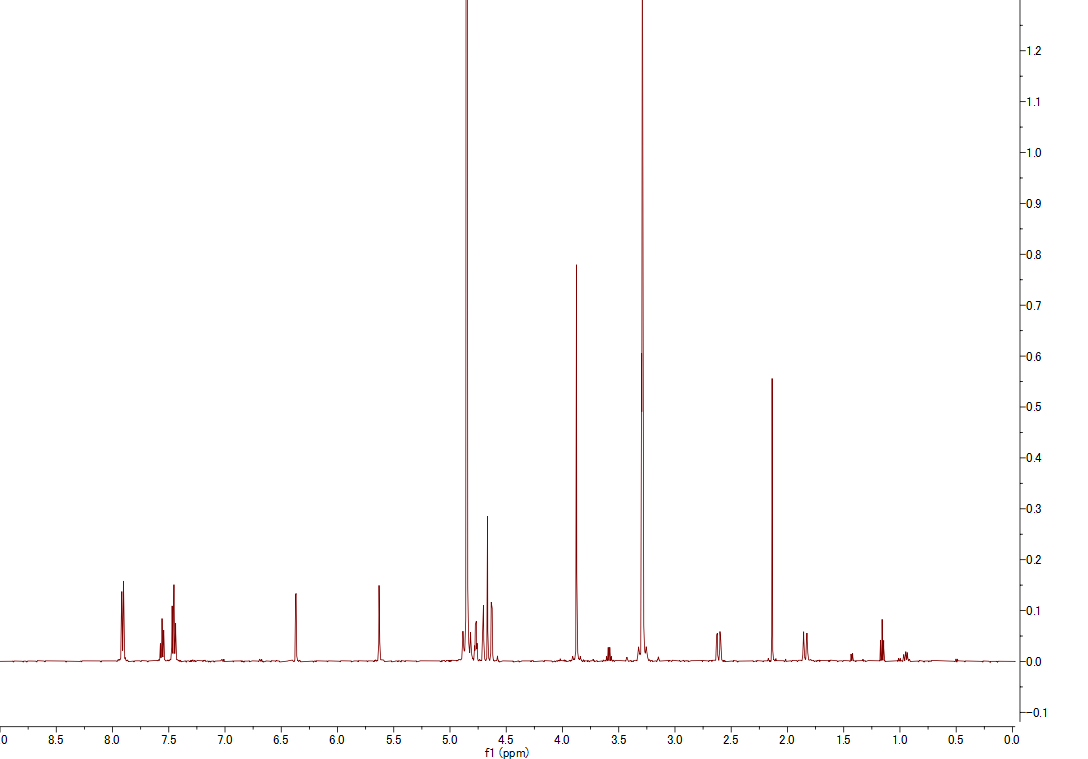 Representative spectral data. Actual batch data may vary. | |
Representative NMR Data 13C NMR (CD3OD, 125 MHz) 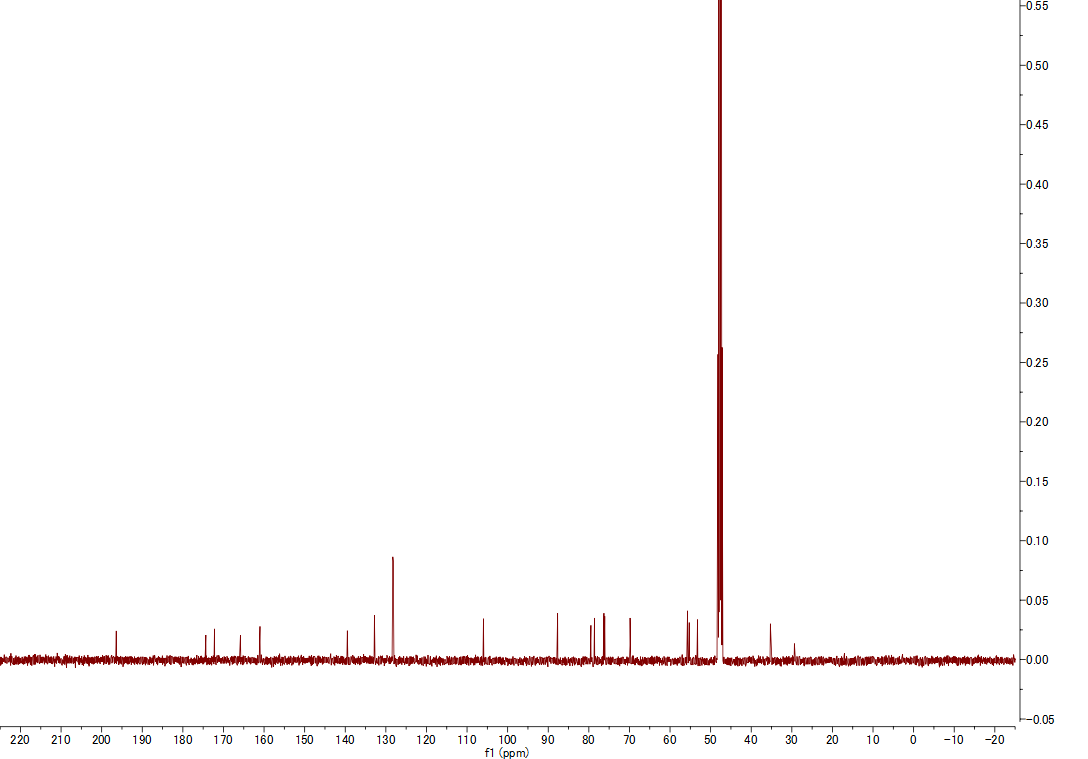 Representative spectral data. Actual batch data may vary. | |
Representative NMR Data 1H NMR (CD3OD, 500 MHz) 13C NMR (CD3OD, 125 MHz) Representative spectral data. Actual batch data may vary. | |